01
Manual entry is slow and error-prone
Images, scans, and paper documents rely on manual transcription, forcing teams to trade speed for accuracy.
Use computer vision, layout analysis, and multimodal models to convert medicine images, complex tables, and unstructured documents into trusted, verifiable, usable data.

Healthcare and elderly care, public-sector documents, education records, and enterprise document management
Identify high-value gaps in real workflows so technology investment produces visible, measurable improvements.
Images, scans, and paper documents rely on manual transcription, forcing teams to trade speed for accuracy.
Merged cells, stamps, handwriting, and content spanning pages make conventional OCR difficult to use.
Content remains trapped in files instead of becoming searchable, verifiable, and available to automation.
The modules rotate automatically, or select one to see how AI fits into day-to-day operations.
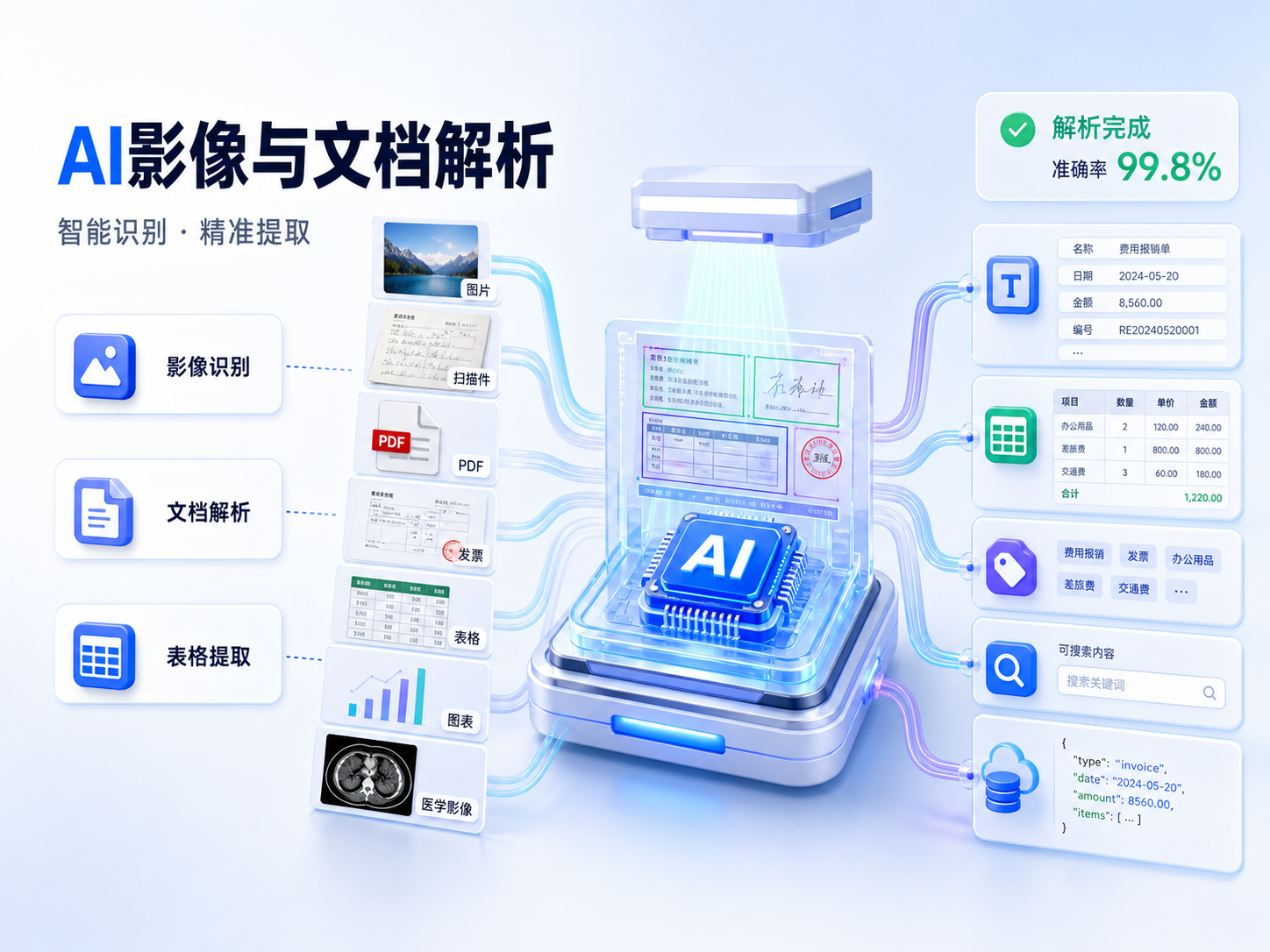
Identify medicine names, specifications, batches, and expiry dates to support registration and risk checks.
Connect data intake, intelligent decisions, business action, and continuous improvement in one executable flow.
Private deployment, configurable business rules, and ongoing operations turn every capability upgrade into a lasting digital asset.